by Nick Valorie | Aug 20, 2026 | Solar Installation
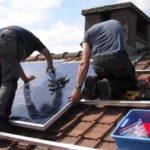
Rising electricity costs can make it harder for Massachusetts businesses to manage operating expenses. A commercial solar installation can help reduce energy costs and provide greater control over long-term electricity expenses. By generating clean energy on-site, businesses can reduce their reliance on grid electricity and protect against future rate increases.
Why Massachusetts Businesses Are Looking at Commercial Solar Installation
Electricity is a major operating expense for many businesses. When utility rates increase, businesses have limited control over what they pay for the energy they use every day.
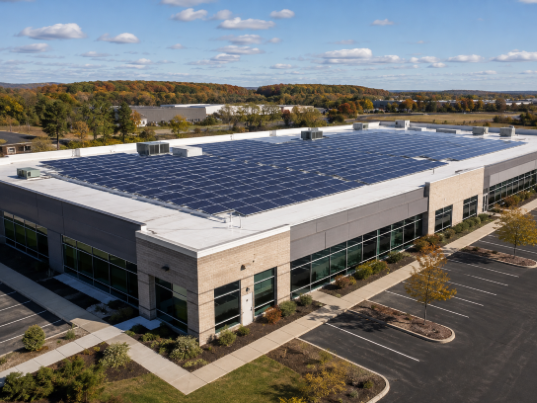
A commercial solar installation allows your business to generate electricity on-site, helping offset the amount of electricity purchased from the utility.
This can help your business:
- Reduce electricity expenses
- Lower dependence on utility rates
- Improve energy cost predictability
- Increase energy independence
- Support sustainability goals
How Commercial Solar Installation Can Reduce Business Energy Costs
Solar panels generate electricity from sunlight during the day, when many businesses are operating and using energy.
By producing electricity on-site, a commercial solar installation can offset some of the electricity your business would otherwise purchase from the utility. Your actual savings depend on energy usage, system size, roof conditions, and solar production.
Benefits of Commercial Solar Installation in Massachusetts
A commercial solar installation can provide several long-term advantages for Massachusetts businesses, including lower operating costs and greater control over energy expenses. It can also support your company’s sustainability goals while helping reduce dependence on traditional grid electricity.
Lower Operating Costs
Reducing electricity purchases can help lower one of your business’s recurring operating expenses.
Greater Energy Independence
Generating electricity on-site gives businesses more control over their energy use and reduces reliance on the utility grid.
Long-Term Business Investment
A properly designed solar system can produce electricity for many years, potentially providing long-term financial benefits.
Stronger Sustainability Profile
Using solar energy can help businesses reduce their reliance on conventional electricity and demonstrate a commitment to renewable energy.
Is Commercial Solar Installation Right for Your Massachusetts Business?
Every commercial property is different. Factors such as electricity consumption, roof size, shading, building orientation, and available incentives can affect whether solar makes financial sense.
A professional assessment can help determine:
- How much solar your property can support
- Estimated energy production
- Potential electricity savings
- Available incentives
- Whether battery storage may be beneficial
Why Choose East Coast Renewable Energy for Commercial Solar Installation?
At East Coast Renewable Energy, we help Massachusetts businesses explore practical renewable energy solutions. Our team evaluates your property and energy needs to develop a commercial solar installation tailored to your business.
We focus on reliable systems, professional installation, and solutions designed to help businesses reduce energy costs and improve long-term energy efficiency.
Get a Free Estimate for Commercial Solar Installation in Massachusetts
Rising electricity costs don’t have to remain completely outside your control. A commercial solar installation can help your Massachusetts business generate its own electricity and potentially reduce long-term energy expenses.
Contact East Coast Renewable Energy today for a free estimate and learn how commercial solar can help your business save.

by Nick Valorie | Aug 13, 2026 | Solar Incentives
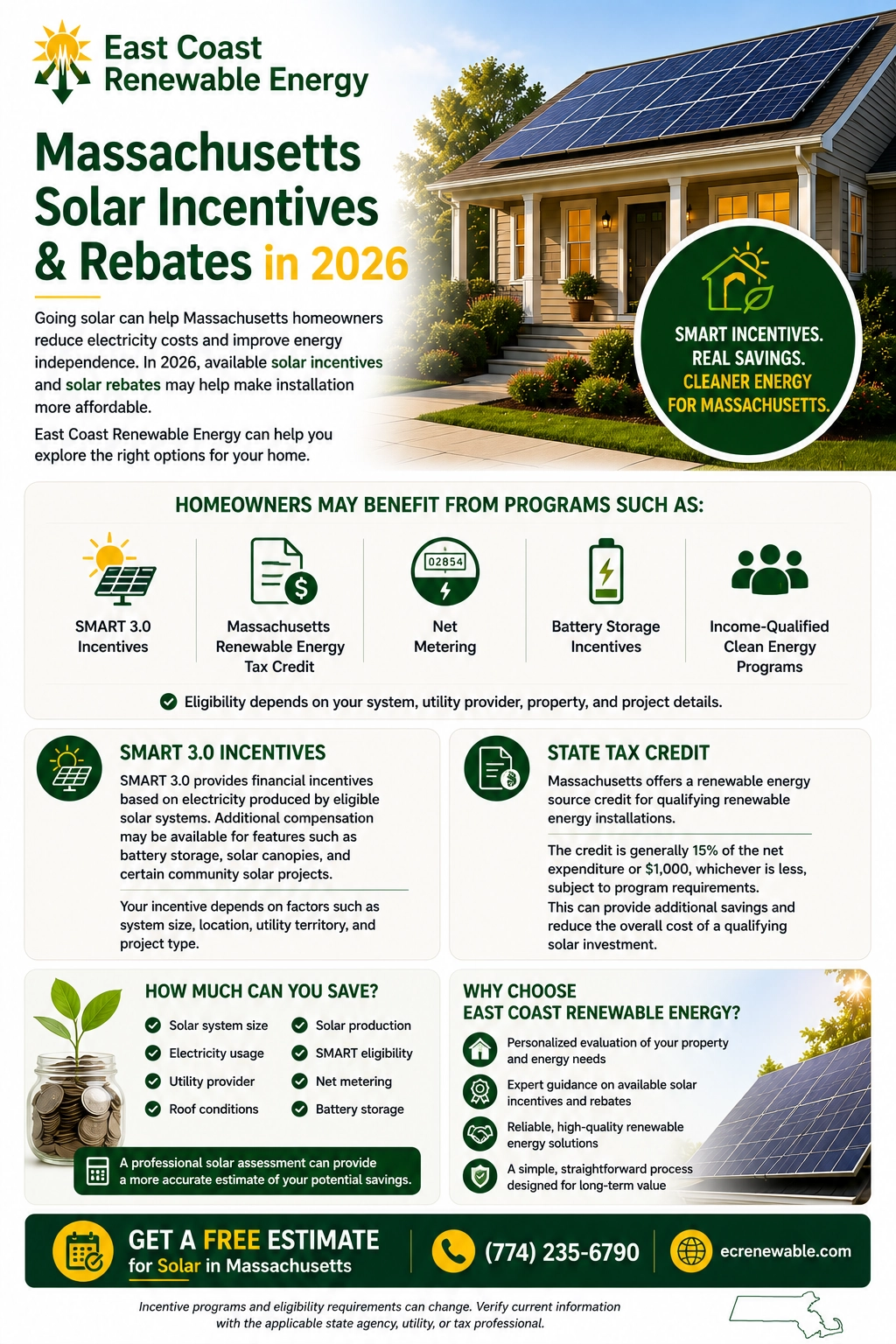
Going solar can help Massachusetts homeowners reduce electricity costs and improve energy independence. In 2026, available solar incentives and solar rebates may help make installation more affordable. Programs such as SMART 3.0, state tax credits, and net metering can provide valuable savings. Understanding these options can help you make a more informed solar investment. East Coast Renewable Energy can help you explore the right options for your home.
Massachusetts Solar Incentives & Rebates in 2026
Homeowners may benefit from programs such as the following:
- SMART 3.0 incentives
- Massachusetts Renewable Energy Tax Credit
- Net metering
- Battery storage incentives
- Income-qualified clean energy programs
Eligibility depends on your system, utility provider, property, and project details.
Massachusetts Solar Incentives & Rebates: SMART 3.0
SMART 3.0 provides financial incentives based on electricity produced by eligible solar systems. Additional compensation may be available for features such as battery storage, solar canopies, and certain community solar projects. Your incentive depends on factors such as system size, location, utility territory, and project type.
Massachusetts Solar Incentives & Rebates: State Tax Credit
Massachusetts offers a renewable energy source credit for qualifying renewable energy installations. The credit is generally 15% of the net expenditure or $1,000, whichever is less, subject to program requirements. This can provide additional savings and reduce the overall cost of a qualifying solar investment.
How Much Can Massachusetts Solar Incentives & Rebates Save?
Your potential savings depend on:
- Solar system size
- Electricity usage
- Utility provider
- Roof conditions
- Solar production
- SMART eligibility
- Net metering
- Battery storage
A professional solar assessment can provide a more accurate estimate of your potential savings.
Why Choose East Coast Renewable Energy for Solar in Massachusetts?
East Coast Renewable Energy helps Massachusetts homeowners understand their solar options. Our team evaluates your property and energy needs before recommending a solution. We can help you understand available solar incentives and solar rebates and their potential impact on your project. Our goal is to make your transition to solar simple and straightforward. We provide reliable renewable energy solutions designed for long-term value.
Get a Free Estimate for Solar in Massachusetts
Ready to explore solar for your home? Contact East Coast Renewable Energy today for a free estimate. Our team can help you understand your solar options, available solar incentives, solar rebates, and potential savings for your Massachusetts property.
Incentive programs and eligibility requirements can change. Verify current information with the applicable state agency, utility, or tax professional.

by Nick Valorie | Aug 5, 2026 | Energy Efficiency Solutions
Investing in Energy Efficiency Solutions is one of the smartest ways to improve your home’s comfort, lower utility bills, and increase its market value. In Massachusetts, where energy costs can be high, energy-efficient homes are more attractive to buyers and offer long-term savings.
Why Energy Efficiency Solutions Increase Home Value
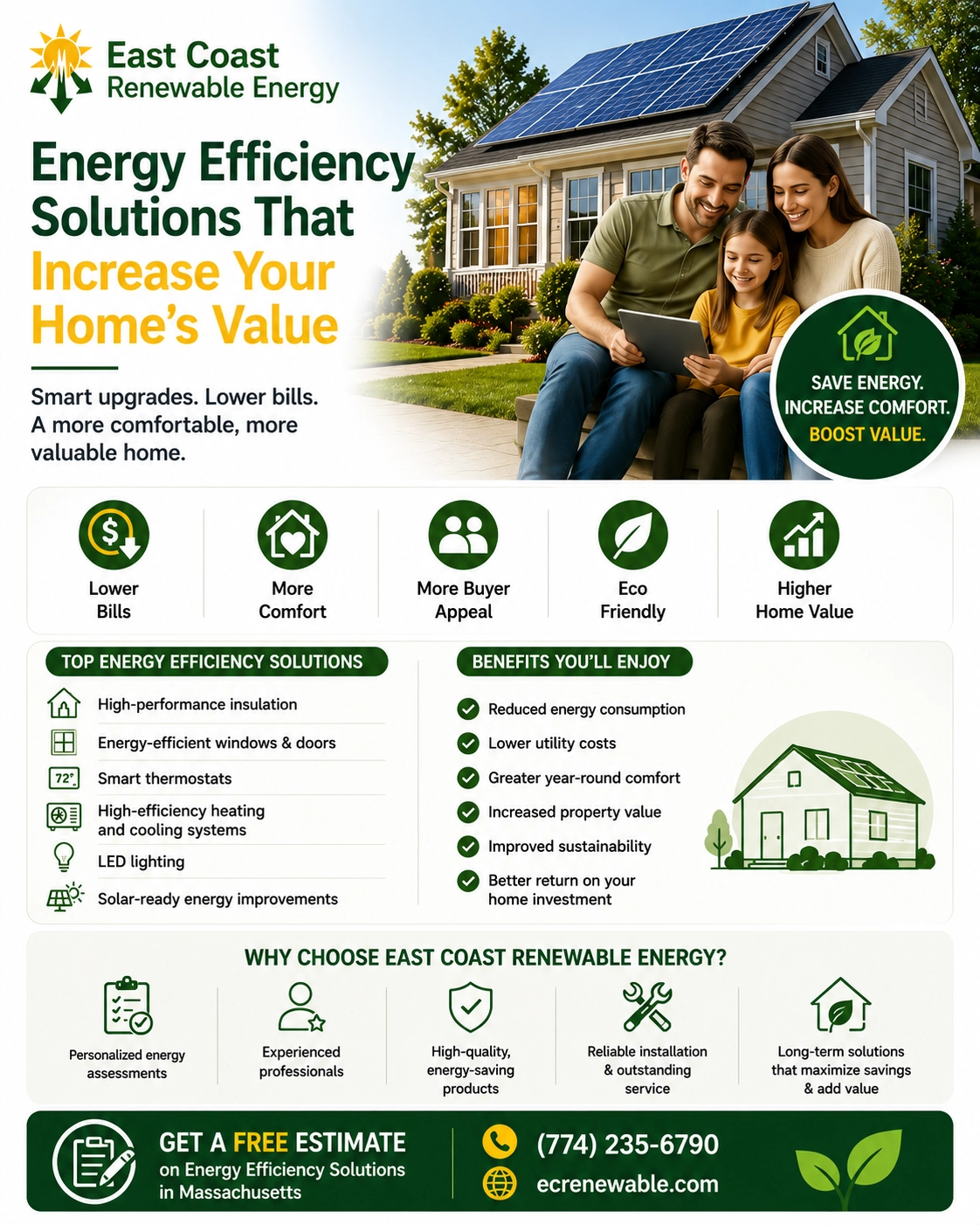
Homebuyers value homes that are affordable to maintain and built for long-term efficiency. Upgrading your home with Energy Efficiency Solutions can:
- Lower monthly energy bills
- Improve indoor comfort year-round
- Increase buyer appeal
- Reduce environmental impact
- Boost your home’s resale value
Top Energy Efficiency Solutions That Add Value to Your Massachusetts Home
The most effective upgrades include:
- High-performance insulation
- Energy-efficient windows and doors
- Smart thermostats
- High-efficiency heating and cooling systems
- LED lighting
- Solar-ready energy improvements
These energy efficiency solutions help reduce energy waste while making your home more efficient and desirable.
Benefits of Investing in Energy Efficiency Solutions
Choosing quality Energy Efficiency Solutions offers both immediate and long-term advantages, including:
- Reduced energy consumption
- Lower utility costs
- Greater year-round comfort
- Increased property value
- Improved sustainability
- Better return on your home investment
Why Choose East Coast Renewable Energy for Energy Efficiency Solutions in Massachusetts
At East Coast Renewable Energy, we provide customised energy efficiency solutions designed to meet the unique needs of Massachusetts homeowners. Customers choose us because we offer:
- Personalized energy efficiency assessments
- Experienced and knowledgeable professionals
- High-quality, energy-saving products
- Reliable installation and outstanding customer service
- Long-term solutions that maximize savings and increase home value
Get a Free Estimate for Energy Efficiency Solutions in Massachusetts
Ready to improve your home’s efficiency and increase its value? Contact East Coast Renewable Energy today for a free estimate on professional energy efficiency solutions in Massachusetts. Let our team help you create a more comfortable, energy-efficient, and valuable home.
by Nick Valorie | Jul 30, 2026 | EV Charging
Owning an electric vehicle changes little routines in ways you don’t always expect.
Instead of stopping for gas on the way home, you plug in your car before heading inside. By morning, it’s ready to go. After a while, it becomes just another part of the day, like setting the coffee maker or locking the front door.
For many Massachusetts homeowners, the biggest question isn’t whether they want an EV. It’s how to charge it conveniently at home.
Why More Massachusetts Homeowners Are Installing EV Chargers
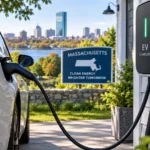
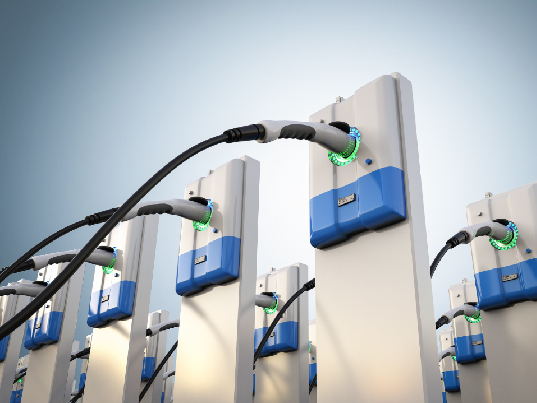
Electric vehicles are becoming more common across Massachusetts. As more drivers make the switch, home EV charging is quickly becoming one of the first upgrades they consider.
Charging at home means you spend less time searching for public charging stations and more time enjoying the convenience of waking up to a fully charged vehicle.
For most families, that’s one less thing to think about during a busy week.
What Type of EV Charger Is Best?
Most homeowners choose a Level 2 EV charger.
Compared to a standard household outlet, a Level 2 charger delivers significantly faster charging, making it practical for everyday use. You can typically recharge your vehicle overnight and be ready for work, errands, or weekend trips the next morning.
The best EV charger for your home depends on your vehicle, driving habits, and your home’s electrical system.
Is Your Home Ready?
Every home is a little different.
Some electrical panels can support an EV charger right away, while others may need a small upgrade before installation. That’s why a professional site assessment is an important first step.
A licensed installer can evaluate your electrical capacity, recommend the right charger, and ensure everything meets Massachusetts electrical codes.
Can Solar Make Charging Even Better?
Many homeowners ask whether solar panels and EV charging work well together.
The answer is yes.
If you already have solar—or you’re planning to install it—you can use the electricity your system generates to help power your vehicle. For many families, it’s a practical way to reduce energy costs while getting even more value from their investment.
Are There Incentives Available?
Massachusetts has supported clean energy adoption through various state programs over the years, and incentive opportunities for EV charging equipment may be available depending on current utility or state offerings.
Because programs can change, it’s always worth speaking with an experienced installer who can explain the latest options available for your home.
Choosing the Right Installation Company
Installing an EV charger isn’t simply mounting equipment on a wall.
It involves evaluating your electrical system, selecting the right charger, obtaining any necessary permits, and completing the installation safely.
Working with an experienced local installer helps ensure your charging station performs reliably for years to come.
Bringing Everyday Convenience Home
One thing we hear from homeowners after installation is how quickly home charging becomes part of everyday life.
There’s no extra stop after work. No wondering if a public charger will be available.
You simply plug in when you get home and wake up ready for wherever tomorrow takes you.
Ready to Learn More?
If you’re considering an EV charging station for your Massachusetts home, East Coast Renewable Energy is here to help. We’ll answer your questions, evaluate your home’s electrical system, and recommend a charging solution that fits your vehicle, your home, and your daily routine—without pressure, just honest guidance.
by Nick Valorie | Jul 29, 2026 | Cooling Tower
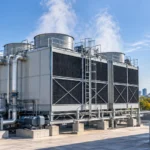
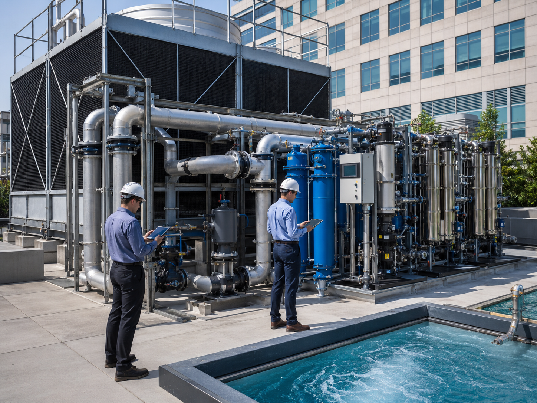
Cooling tower water filtration is priced against the savings it produces, not against a flat equipment cost. In practice, a properly sized particle precipitation system pays for itself in about 24 months by cutting makeup water use by 15–20% and chiller energy use by 12–15%.
That is the short answer. The rest of this guide shows you how to build the number for your own facility, what drives the price up or down, and what to press a vendor on before you sign.
Why There Is No Single Price
Two buildings with the same square footage can need very different systems. Cost is driven by a handful of variables:
- System tonnage. Bigger chiller plants need a larger precipitator skid. This is the single biggest cost driver.
- Number of loops. One open cooling tower loop costs less than a tower plus a closed chilled water loop.
- Water quality on day one. Heavily fouled systems take more work to bring down to baseline.
- Piping and tie-in access. A mechanical room with clear access is cheaper to work in than a crowded rooftop or penthouse.
- Electrical availability. If power has to be pulled a long distance, that adds labor.
- Number of buildings. Campuses and multi-site facilities are usually sized and priced as a group.
This is why a credible proposal starts with your actual system data, not a phone estimate.
A Worked ROI Example
Use your own utility bills for this. Below is the structure with illustrative numbers.
Step 1 — Water and sewer savings. Pull annual makeup water volume off your water bill. Say the facility uses 2,000,000 gallons per year.
Massachusetts water is not cheap, and sewer usually costs more than the water itself. In Marlborough, for example, FY2026 in-city rates are $8.73 per 100 cubic feet for water and $9.81 for sewer — a combined $18.54 per 748 gallons, or roughly $24.79 per 1,000 gallons.
- 2,000,000 gallons × $24.79 / 1,000 = $49,580 per year
- A 15–20% reduction = $7,437 to $9,916 saved per year
Step 2 — Chiller energy savings. Clean tubes transfer heat better, so the chiller runs less. Using an illustrative plant load of 600,000 kWh a year at $0.28/kWh, that is $168,000.
- A 12–15% reduction = $20,160 to $25,200 saved per year
Step 3 — Add them up. Combined savings land between roughly $27,600 and $35,100 per year in this example. Against a 24-month payback, that tells you the system cost sits near two years of savings — and everything after month 24 is margin.
Step 4 — Count the savings that never hit the utility bill.
- Fewer emergency chiller cleanings
- Longer equipment life and deferred capital replacement
- Reclaimed cooling capacity, which can let you avoid a chiller upgrade entirely
- Less time your team spends chasing fouling problems
The Case Study That Anchors the Math
At the University of Missouri Kansas City, suspended solids measured 6,127 ppm on day one. Thirty days later they were at 106 ppm — a 98.3% reduction. Energy use dropped 15%, and a licensed professional engineering firm confirmed $69,656 in avoided energy costs.
The part that matters most for capital planning: the campus added 57,000 square feet of cooled space with no chiller plant capacity upgrade. That is a deferred capital project, not just a lower utility bill.
“The cleanliness of the chillers when we open them for winter maintenance and the sump not being covered by 6+ inches of muck is our proof the system works.” — Scott Duck, Supervisor of HVAC Operations, University of Missouri Kansas City
Six Questions to Ask Any Vendor
Get these in writing before you sign anything:
- Is installation included, or quoted separately?
- How much downtime? A skid-mounted system installs in parallel with existing infrastructure, so the honest answer should be none.
- What is the annual maintenance cost? Media-based systems carry a replacement bill. Precipitation systems purge sediment automatically.
- Who verifies the savings? Ask for third-party laboratory analysis, not vendor spreadsheets.
- What happens to my chemical contract?
- Can you show verified results at a facility like mine?
Look at Your Supply Rate at the Same Time
A filtration project cuts how much energy your chiller plant uses. Your supply contract sets what each kilowatt-hour costs. Fixing one and ignoring the other leaves money on the table.
If you have not reviewed your electric supply agreement recently, it is worth pairing this project with a look at energy procurement and broader energy efficiency solutions. It is the same facility budget and often the same approval cycle.
It is also worth a call to your local water department and your utility’s business efficiency program. Commercial water-conservation equipment sometimes qualifies for incentives that reduce net project cost.
How to Get a Real Number for Your Building
General estimates do not survive a capital request. Here is the path to a defensible figure:
- Complete a 10-minute intake survey. Your facilities team supplies system tonnage, water use, energy use, and current chemical program.
- Engineering assessment. ECR’s team sizes the right system for your plant.
- Review your numbers. You get projected water savings, energy savings, system cost, and ROI timeline — specific to your building, within 5 business days.
- Install with zero downtime. The skid ties in parallel to your existing loops.
There is no cost for the assessment and no obligation to proceed.
Get Your Facility’s Numbers
If your building has a cooling tower or chilled water system, it qualifies for a free assessment. Learn more about cooling tower water filtration systems or contact ECR to start the intake survey.